

For over two decades, search engine optimization was built on a simple premise: strings, not things. Search engines read text character by character, matching exact keyword phrases across titles, headings, and backlinks to determine relevance.
That paradigm is now extinct.
With the shift to Google’s Knowledge Graph, Retrieval-Augmented Generation (RAG), and Generative Engine Optimization (GEO), modern search platforms evaluate things, not strings. They process the web through Entities—singular, well-defined concepts—and map how those concepts relate to one another in vast semantic networks.
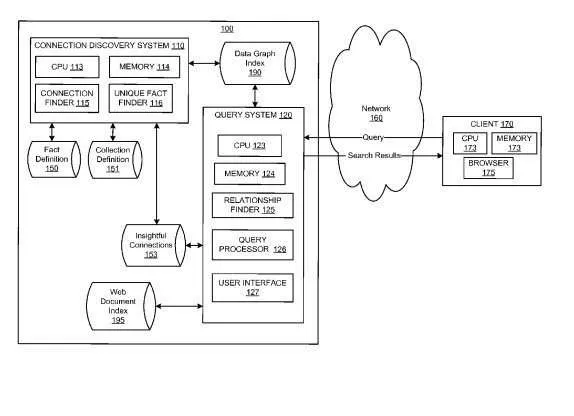
To rank on Google and secure citations in AI platforms like ChatGPT, Perplexity, and Gemini, brands must master three connected pillars: Entity SEO, Knowledge Graph Optimization, and Off-Page Digital PR.
1. Demystifying Entity SEO: Moving Beyond Keywords
What is an Entity in Modern Search?
According to Google’s patent documentation, an entity is:
“A thing or concept that is singular, unique, well-defined, and distinguishable.”
An entity does not need to be a physical object like a phone or a building. Entities include:
- People: Founders, executives, authors, industry experts.
- Organizations: Companies, agencies, non-profits, universities.
- Places: Cities, addresses, regions, virtual venues.
- Abstract Concepts: SEO, Generative AI, Quantitative Finance, Machine Learning.
Keywords vs. Entities: The Structural Difference
Traditional Keyword Approach:
[ "best AI agency Pune" ] ---> Exact phrase matching on page content

Entity-Based Approach:
[ Agency Node ] --- (locatedIn) ---> [ Pune Node ]
       |
  (specializesIn)
       v
[ Generative AI Node ]
When search engines transition from matching keywords to mapping entities, content evaluation changes fundamentally:
| Dimension | Traditional Keyword SEO | Entity-Based SEO |
| Primary Focus | Keyword density, exact placement, LSI words | Topical coverage, entity relationships, semantic clarity |
| Search Engine Engine | Indexing documents based on inverted text indexes | Indexing concepts within a Knowledge Graph |
| AI / LLM Relevance | Low (LLMs ignore raw keyword counts) | High (LLMs rely on entity vectors & RAG embeddings) |
| Authority Indicator | Inbound anchor text matching | Brand co-occurrences, schema, verified knowledge nodes |
2. Knowledge Graphs: The Brain Behind Search & AI Citation
A Knowledge Graph is a database that stores entities as nodes and their relationships as edges.
When a user prompts an AI model or searches Google, the engine queries its Knowledge Graph to understand intent and retrieve verified facts.
(Content Spring) --- [isA] ---> (Digital Marketing Agency)
(Content Spring) --- [foundedBy] ---> (Sachin)
(Content Spring) --- [specializesIn] ---> (AI Search Visibility)
(Content Spring) --- [locatedIn] ---> (Pune, Maharashtra)
The Knowledge Vault & Confidence Scores
Google maintains an internal database known as the Knowledge Vault. It crawls structured and unstructured web data to assign a confidence score to every facts statement it encounters.
If your site states “Content Spring was founded in Pune,” Google looks across the web to corroborate that claim:
- Official Site Schema: States Pune location.
- Crunchbase / Wikipedia / Wikidata: Confirms Pune headquarters.
- Third-Party Media Press Releases: Mentions Pune operations.
Once corroboration crosses a critical confidence threshold, the entity is assigned a permanent Knowledge Graph ID (KGID) (e.g., /g/11g_x5_y8_) and qualifies for a Google Knowledge Panel.
3. The Role of Off-Page Digital PR in Building Entity Trust
Technical schema markup tells search engines who you claim to be. Off-Page Digital PR proves who you actually are.
In an era where generative AI can generate thousands of blogs in minutes, search engines heavily discount self-published claims on your domain. They rely on off-page validation to confirm E-E-A-T (Experience, Expertise, Authoritativeness, and Trustworthiness).
How Digital PR Nourishes the Knowledge Graph
[ Strategic Digital PR Campaign ]
               |
  +------------+------------+
  |                         |
  v                         v
[ High-Tier Media Mentions ]  [ Unlinked Brand Co-occurrences ]
  |                         |
  +------------+------------+
               |
               v
[ Unstructured Data Extracted by Search Crawlers & LLMs ]
               |
               v
[ Knowledge Graph Entity Confidence Score Increases ]
- Unlinked Brand Mentions Matter: Even without a traditional hyperlink, when top-tier news sites mention your brand alongside core industry topics, search engines register a semantic connection between your entity node and those topical nodes.
- Co-Occurrence Vectors: If your brand name regularly appears near phrases like “AI Search Optimization,” “Generative Engine Optimization,” and “Schema Implementation,” LLMs associate your brand entity with those expert vectors.
- Corroborated Trust: High-authority press coverage acts as external validation, reducing hallucinations in AI models when answering queries about your brand.
4. Blueprint: Step-by-Step Entity & Knowledge Graph Strategy
To establish your entity authority and integrate your brand into search engine Knowledge Graphs, execute this step-by-step strategy:
Phase 1: Entity Reconciliation
├── Audit existing digital footprint
├── Map core brand entity, founders, and services
└── Align baseline business information (NAP) across all profiles

Phase 2: On-Page Semantic Schema Architecture
├── Implement JSON-LD Organization schema on home page
├── Implement Person schema for key executive authors
└── Add `sameAs` attributes linking to verified third-party nodes

Phase 3: Digital PR & Entity Corroboration
├── Secure brand mentions in authoritative publications
├── Publish industry research reports for citation harvesting
└── Claim and verify third-party entity profiles (Wikidata, Crunchbase)

Phase 4: Continuous Verification & Monitoring
├── Track Knowledge Panel stability
└── Monitor Brand Share of Voice in LLM responses (Gemini, ChatGPT)
Step 1: Execute Semantic Schema Architecture
Add detailed JSON-LD structured data to your website’s header to remove ambiguity regarding your brand entity.
JSON
{
  "@context": "https://schema.org",
  "@type": "ProfessionalService",
  "@id": "https://contentspring.in/#organization",
  "name": "Content Spring",
  "url": "https://contentspring.in",
  "logo": "https://contentspring.in/logo.png",
  "description": "SEO, GEO & AI Search Visibility Agency specializing in entity optimization.",
  "address": {
    "@type": "PostalAddress",
    "addressLocality": "Pune",
    "addressRegion": "Maharashtra",
    "addressCountry": "IN"
  },
  "founder": {
    "@type": "Person",
    "name": "Sachin",
    "jobTitle": "Founder"
  },
  "sameAs": [
    "https://www.linkedin.com/company/contentspring",
    "https://twitter.com/contentspring",
    "https://www.crunchbase.com/organization/contentspring"
  ]
}
Step 2: Utilize sameAs Attributes to Bridge Nodes
The sameAs property acts as an explicit instruction telling search engines: “This webpage refers to the same entity described on these external authoritative profiles.” Point your schema to:
- Wikidata entries
- Crunchbase profiles
- Verified social channels
- Official industry directory listings
Step 3: Run Data-Driven Off-Page PR Campaigns
Move away from generic directory submissions. Modern Digital PR focuses on generating primary research, proprietary benchmark studies, and expert commentary:
- Data-Driven Stories: Analyze 1,000 queries in your niche to publish an industry report. High-tier journalists link to and quote data sources, creating strong contextual backlinks.
- Thought Leadership Commentary: Position company executives as go-to commentators on breaking industry news.
5. The GEO Connection: How Entity SEO Drives AI Search Visibility
Generative Engine Optimization (GEO) focuses on getting your brand cited inside AI answers generated by ChatGPT, Perplexity, Google Gemini, and Claude.
When an AI engine processes a query like “Which agency handles GEO and AI Search Visibility in India?”, it performs a multi-step retrieval:
1. User Query Received
       ↓
2. Query Entity Extraction ---> ["GEO", "AI Search Visibility", "India"]
       ↓
3. Knowledge Graph Lookup & Vector Similarity Search
       ↓
4. Entity Verification & Trust Check (Corroborated by Off-Page Mentions & Schema)
       ↓
5. Generative Answer Construction with Source Citation
Without a clear, well-defined Entity Node and strong Off-Page Corroboration, AI engines will skip your brand in favor of competitors whose entity profiles carry higher confidence scores.
Summary: Building a Defensible Entity Footprint
Keywords are transitory, but entities are permanent. By shifting your strategy from matching search terms to building a well-corroborated entity footprint, you protect your search performance against algorithm updates and position your brand for visibility across AI engines.
- Clean up your entity claims: Ensure business information is identical across your site, social platforms, and databases.
- Implement structured schema: Use JSON-LD with clear
@idanchors andsameAslinks. - Invest in Digital PR: Build real authority through media coverage, primary research, and industry mentions.