
The Way People Search Has Changed Forever
Not long ago, SEO meant one thing: rank higher on Google. Get to page one, get the clicks, grow your business. Simple That’s no longer the full picture.
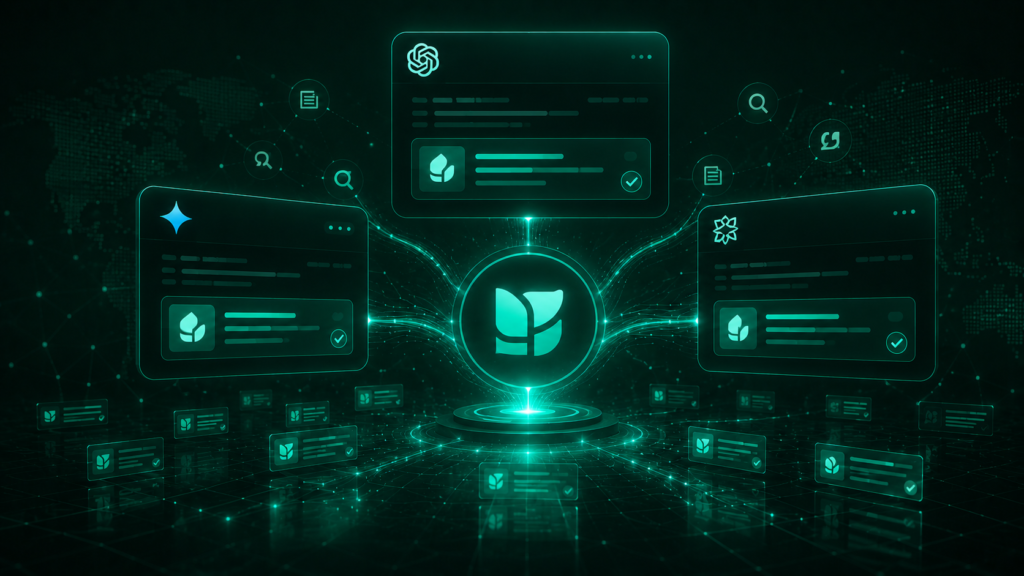
Today, when someone types a question into ChatGPT, asks Gemini for a recommendation, or searches on Perplexity, they don’t see a list of ten blue links. They see a single, confident answer. One source. One brand. One winner. If that brand isn’t yours, you’re invisible no matter how well you rank on Google.
This is where Generative Engine Optimisation, or GEO, comes in.
What Exactly is GEO?
Generative Engine Optimization is the practice of optimizing your brand, content, and online presence so that AI-powered search engines like ChatGPT, Google’s AI Overviews, Gemini, and Perplexity cite, reference, and recommend your brand in their responses.
Unlike traditional SEO, where you compete for a position on a search results page, GEO is about becoming the source that AI models trust and pull from when answering questions in your industry.
Think of it this way:
- SEO = rank on Google’s results page
- GEO = be the answer AI gives when someone asks Google, ChatGPT, or Gemini a question
Both matter. But most brands are only doing one.
How Do AI Search Engines Decide What to Cite?
AI models don’t randomly pick sources. They look for signals that indicate authority, trustworthiness, and relevance. Specifically:
Entity authority Is your brand clearly defined across the web? Does Google’s Knowledge Graph recognize you? Are you mentioned consistently on credible third-party sources?
Content structure Is your content written in a way that directly answers questions? AI models favor content that is clear, factual, and well-structured not keyword-stuffed pages designed purely for rankings.
Brand mentions The more your brand name appears in credible contexts across the web news articles, industry blogs, forums, directories the more likely AI models are to surface you as a trusted source.
Schema markup Structured data helps AI models understand exactly what your business does, who it serves, and where it operates.
If these signals are weak or missing, AI search engines simply won’t know you exist even if you’re ranking well on Google.
Why 2026 is the Year This Becomes Non-Negotiable
AI search adoption has crossed a tipping point. According to recent industry data, a significant and growing share of online queries now happen on AI platforms rather than traditional search engines. The trend is accelerating, not slowing.
More importantly, the behavior shift is permanent. Once users experience the convenience of getting a direct, conversational answer, they don’t go back to scrolling through ten links.
For brands, this creates an urgent question: are you optimizing for the search behavior of today, or the search behavior of three years ago?
GEO vs SEO: Do You Have to Choose?
No and you shouldn’t.
Traditional SEO remains important. Google still processes billions of searches daily. Rankings still drive traffic. But GEO and SEO are complementary, not competing strategies.
The brands that win in 2026 and beyond will be those that build visibility across both traditional and AI-powered search. They’ll rank on Google and get cited by ChatGPT. They’ll appear in featured snippets and in Perplexity’s answers. They’ll be present wherever their audience is looking regardless of which tool they use to search.
This is exactly what we mean when we say: be the first answer everywhere.
What GEO Looks Like in Practice
GEO isn’t a single tactic. It’s a set of interconnected strategies:
- Entity SEO Building a clear, consistent brand identity that AI models can recognize and trust
- Answer Engine Optimization (AEO) Structuring content to directly answer the questions your audience is asking
- Technical SEO Ensuring your site is crawlable, fast, and marked up with the right schema
- Content authority Publishing content that earns mentions, citations, and links from credible sources
- Brand presence Ensuring your brand exists and is accurately described across directories, social platforms, and industry publications
When these elements work together, AI models start to see your brand as a reliable, authoritative source and they begin citing you in their responses.
Is Your Brand Visible to AI Search?
Here’s a simple test. Open ChatGPT or Perplexity and ask: “What are the best [your service] agencies in [your city]?”
Does your brand appear?
If not, you have work to do and the sooner you start, the better. AI models learn from the web as it exists today. Brands that establish authority now will have a significant advantage over those that wait.
At Content Spring, we help ambitious brands build visibility across both traditional and AI-powered search. If you want to know exactly where you stand and what it would take to become the first answer get a free audit.